Sunday, 14 December 2014

13 Incredibly Adorable Holiday Tips From Your Cute Pets

1. “Nothing gets the holiday feels flowing quite like some good old CHRISTMAS LIGHTS, AMIRITE?”

view more here

UK to send hundreds of troops to Iraq - newspaper

Britain will send hundreds of troops to train Iraqi and Kurdish forces in Iraq, Defence Secretary Michael Fallon told The Daily Telegraph newspaper on Saturday, in a bid to step up the battle against Islamic State fighters.

U.S President Barack Obama has already authorised the deployment of over 3,000 troops to the country and the top U.S commander guiding the coalition effort said earlier this week that allies would send about 1,500 additional troops.

Fallon said troops in the "very low hundreds" would be sent next month.


He said that following air strikes by U.S.-led forces including Britain, Islamic State had changed its methods, moving away from use of large formations in open space.

"They are increasingly tucked away in towns and villages. That means they have got to be rooted out by ground troops.

"This has to be done by an own-grown army, not by western groups."

On Saturday, Islamic State fighters killed at least 19 policemen in a town in Western Iraq, as the group continues to seize territory in the region, despite aerial strikes.

Fallon told the newspaper that the exact number of Britons to be sent had not been finalised but that one of four teams would provide training in a Kurdish area and the remaining three in locations nearer to Baghdad.

"A key skill we are going to be helping with is counter-IED (improvised explosive devices), particularly vehicle explosive devices which the Iraqi army hasn't come across for some time," Fallon was quoted as saying.

Air strikes, clashes near two eastern Libyan oil ports

Forces loyal to Libya's recognized government conducted air strikes on targets on Saturday near the eastern oil ports of Ras Lanuf and Es-Sider to stop an advance by a rival force towards the facilities, officials said.

The oil ports, two of Libya's biggest, accounting for more than 300,000 barrels a day of exports, were working normally, an oil official said.

The North African country is caught in a conflict between two competing governments, parliaments and chiefs of staff, allied to armed factions, part of turmoil three years after the ouster of Muammar Gaddafi.


Saqer al-Joroushi, an air force commander allied to Prime Minister Abdullah al-Thinni, said his aircraft had attacked positions near Sirte, a costal city in central Libya.

He said a rival force from Misrata, a coastal city west of Sirte and the ports, had advanced towards the terminals with a large number of vehicles. "We bombed them to stop them from entering the ports," he said.

Tripoli-based al-Nabaa television said a force it said had been mandated by the General National Congress (GNC), a rival assembly based in Tripoli since a group called Libya Dawn seized the capital in August, had started an operation to take the ports.

It quoted the head of the force, adding that two people had been killed in clashes near Es-Sider port. Websites close to Libya Dawn also said such an operation had started.

Thinni has been forced to work out of the east since Libya Dawn seized the capital Tripoli after a one-month battle, setting up its own cabinet and reinstating the previous assembly, the GNC.

The House of Representatives, elected in June, is also working out of the east.

Both governments have sought to control the oil facilities, the country's only source of income. Last month, Libya Dawn took over the southern El Sharara oilfield, one of the country's biggest, after a rival force from Zintan allied to Thinni had withdrawn.

Thinni said last week his government were trying to control the oil revenues by setting up a payment system outside the central bank in Tripoli.

Xiaomi's India smartphone ban exposes wider patent risk

The court order that banned Chinese mobile maker Xiaomi from selling its phones in India has halted its breakneck expansion into the world's fastest growing major smartphone market and could be just the start of a string of patent challenges.

Xiaomi Technology only started selling in India in July and quickly became the country's fastest growing smartphone brand; with minimal marketing, it is already outselling even low-cost smartphones running Google's Android One.

Hugo Barra, the former Google executive now leading Xiaomi's international operations, told Reuters in November how rapidly the country had taken to his brand.

All it took was a single Facebook post to draw dozens of superfans to a California Pizza Kitchen in Mumbai to meet him, he said.

"It was far more than we expected. The community has really, really embraced us," he said.

And then came Wednesday's court order to stop selling, after a patent infringement case was filed by telecom equipment maker Ericsson. The ban will last until at least Feb. 5, when the Delhi court hears the case again.

But that is unlikely to be the end of the young company's battle over intellectual property (IP) rights.

Sources close to Xiaomi say its leadership has privately acknowledged for years its vulnerability to patent entanglements. The higher risks of IP litigation in Western markets even played a role in shaping Xiaomi's strategy of expanding in India and Southeast Asia, the sources said.

Xiaomi said in a statement that "it isn't easy" to build up a patent portfolio as a start-up company, but it aims to have filed 8,000 applications by 2016.

On its home turf, Xiaomi has already been dogged by IP controversies with other Chinese firms, mostly over content rights for its streaming TV service.

As its smartphone business, already number one in China, continues to grow, however, industry analysts expect greater pressure at home, particularly since two of its fiercest handset rivals, Huawei and ZTE Corp, are among the top telecom patent holders in China.

GROWTH SETBACK

Until it is lifted, the ban in India will be particularly hard on growth prospects. In a country where just one in 10 people use smartphones, the potential is vast. The market grew 82 percent in the third quarter, while China expanded at a relatively modest 10.8 percent, according to research firm IDC.

Barra posted a message on the company's website on Friday apologising to fans.

"Rest assured that we're doing all we can to revert the situation," he wrote. "Stay tuned for more information."

In China, Xiaomi already outsells Apple and Samsung Electronics in smartphones, and it became the world's third-largest vendor as of October, though it is little known outside Asia.

Unlike Apple, which introduces a new iPhone just once a year, Xiaomi rolls out updated models frequently, usually in small batches that sell out in seconds. It sells only online, and with minimal advertising, relying on word of mouth to build anticipation for each new launch.

In India, Xiaomi initially imported 10,000 devices a week but soon had to ramp that up to 60,000 to 100,000 to meet demand, India business chief Manu Jain told Reuters before the sales ban. It has chartered flights four times to rush in fresh supplies.

Jain did not respond to a request for comment on the business impact after the order.

Rushabh Doshi, an analyst at technology research firm Canalys in Singapore, said the ban would "leave a gap in the market, to be quickly filled by local or international vendors looking to increase market share".

The court case will also make phone vendors wary about their current patent portfolio and require them to step up their spending on research and development, he added. ($1 = 62.3550 Indian rupees)

Alleged UK hacking of Belgian telecoms firm was far-reaching-reports

Hacking of computers at Belgian telecoms firm Belgacom, alleged to have been carried out by a British spy agency, was more far-reaching than previously thought and went undetected for more than two years, according to reports published on Saturday.


News of the intrusion into Belgacom's networks first broke late last year when Belgium asked Britain, its NATO and European Union partner, to respond to allegations that its intelligence service was responsible.

Belgian newspaper De Standaard, Dutch paper NRC Handelsblad and The Intercept, a website that regularly reports on documents leaked by former U.S. security contractor Edward Snowden, published detailed accounts on Saturday of how the scheme is alleged to have worked.

"In its digital attack on Belgacom, the British secret service was able to intercept more communications than was previously realised," De Standaard said.

It said British surveillance agency GCHQ got into the network in 2011 by hacking three employees and was then able to "poke around undisturbed" in the network of Belgacom and subsidiary BICS for two-and-a-half years.

"The security service was thus able to intercept communications from Belgacom's individual clients, from NATO and the EU, as well as from clients of hundreds of international telecoms providers. It is an unprecedented violation of the privacy of anybody who used a mobile telephone," it said.

The Intercept, financed by eBay founder Pierre Omidyar, said its reporting was based on documents from Snowden, who is currently living in Russia, and interviews with sources familiar with the investigation at Belgacom.

It said the malicious software found on Belgacom's systems was one of the most advanced spy tools ever identified by security researchers, who called it "Regin".

Belgacom, Belgium's dominant telecoms provider, was seen as a top target by the British spy agency because it plays an important role in Europe and has partnerships with hundreds of telecommunications companies across the world, it said.

Citing a GCHQ document from 2011, the website said the British spy agency hacked into the computers of three Belgacom engineers, gaining access to the firm's networks for surveillance purposes. Later, GCHQ obtained data being sent between Belgacom and other operators, it said.

The hack was not detected until 2013, when Belgacom said it had improved security and removed an unknown virus from its systems and that there was no indication of any impact on customers. It did not respond to requests for comment on Saturday.

GCHQ has previously declined comment on the allegations.

Hackers vs James Bond: 'SPECTRE' script stolen in Sony attack

Early villains have emerged in the next James Bond film "SPECTRE": hackers who stole a version of the screenplay as part of a devastating cyberattack on Sony Pictures.

Producers of the James Bond films said they learned on Saturday morning that an early version of the "SPECTRE" script was among material stolen and made public by hackers who infiltrated computers at the Sony studio.

"Eon Productions is concerned that third parties who have received the stolen screenplay may seek to publish it or its contents," Eon said in a statement, while warning that the script is protected by U.K. copyright laws.


"SPECTRE," starring Daniel Craig as 007, is set for release on Nov. 6, 2015. Filming began this month after producer Barbara Broccoli and director Sam Mendes unveiled the title, cast and new car, but little about the plot.

"I was so excited to tell this story but to explain why, I would have to tell you the plot and I can't do that," said Mendes at the presentation in England, a reminder of Sony's might in the movie world.

The Bond franchise is one of the most lucrative for Sony Pictures and the last installment "Skyfall" brought in $1.1 billion worldwide, more than any other Bond film.

A Sony spokesman said news reports that the cyberattack forced the studio to stop production on films, including "SPECTRE," were wrong.

"Productions are still moving forward," Robert Lawson told Reuters.

Hackers launched an attack on the Sony Corp. entertainment arm on Nov. 24, disabling the computer network and stealing and leaking a trove of sensitive information in the most severe cyberattack on a company on U.S. soil. The identity of the hackers has yet to be determined.

Instagram now bigger than Twitter


Instagram has told Newsbeat it has the potential to "change the world" as it announced it has overtaken Twitter with 300 million users.
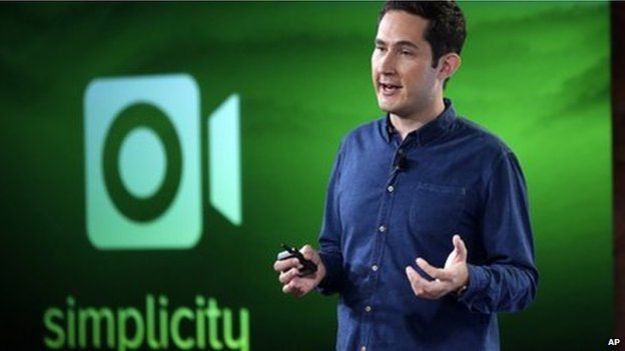
The company's CEO Kevin Systrom described the milestone as "exciting" and said the company would "continue to grow".
Twitter claims to have 284 million users accessing the network each month.
Facebook, which boasts 1.35 billion monthly active users, bought Instagram in 2012.
Speaking to Newsbeat ahead of the announcement, Kevin Systrom said: "Instagram is about seeing a live pulse of the world right now, it's not just about taking a photo of a cute baby or a cute dog."
Instagram is also introducing verified accounts similar to the blue tick symbols used by Facebook and Twitter.

Newsbeat understands regular users who have been impersonated could be verified, alongside celebrities, sports stars and brands.
"We want to be all about authentic users and you making sure that you know you're following real people not bots, not spam accounts, not fake accounts." Mr Systrom added.
In an attempt to get rid of fake accounts or those breaking the company's rules, Instagram said it is deleting "spammy" accounts.
The company has warned that some users may find they have fewer followers as a result.
Instagram's co-founder hinted the company would soon be adding new features based around specific events.
"You're literally getting a view of what's happening in the world right now.
"What we need to do is figure out how to take the fact that everyone's contributing in the world and broadcast that more globally.
"If you're interested in what's happening at the World Cup, you can peer in, see the football players and see what they're thinking and doing before they go onto the field.
"Those are the types of things that I want to enable over the next year."
Since it was set up by co-founders Kevin Systrom and Mike Krieger in October 2010, Instagram has grown rapidly.
In February 2013, the company announced it had reached 100 million active monthly users.
Recently Instagram introduced advertising, with "sponsored posts" allowing brands to reach the app's growing number of users.
"Early on I would review and approve every single ad before it went on," Kevin Systrom said.